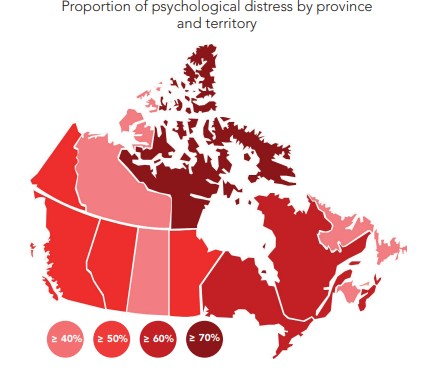
 The Study revealed that 55% of Alberta survey respondents indicated they have experienced psychological distress at least once since the beginning of their career, similar to 57% of national survey respondents. Over half of the national survey respondents who reported having experienced psychological distress rated their level of distress as high to very high.
 The information in this course is intended for the legal profession as an aid and is not intended to constitute legal or other professional advice. Readers must exercise their professional judgment about the accuracy, utility and applicability of the material. The Law Society of Alberta and Alberta Lawyers Indemnity Association (ALIA) accept no responsibility for any errors or omissions in any resource. If you find any information that is unclear, inaccurate or outdated, please send an email with details to Education.
Any information pertaining to the ALIA Group Policy contained in any resource is provided for information purposes only. The Group Policy contains other terms and conditions that may affect coverage. Subscribers to the Group Policy should always review the Group Policy, to confirm their obligations in any circumstance.
Any third-party resources are suggested for information and reference only. The Law Society and ALIA are not responsible for the accuracy, content or information contained in these sites. Views expressed in these resources are the views of the authors individually and do not necessarily reflect the view of the Law Society or ALIA.
The Law Society of Alberta acknowledges the work done by the Law Society of British Columbia in
creating its courses and making the course materials available to the Law Society of Alberta as the
basis for the Alberta Learning Centre Courses. Any errors are the sole responsibility of the Law
Society of Alberta and users of the course materials have no recourse to the Law Society of British
Columbia for any reliance on materials created by the Law Society of British Columbia.